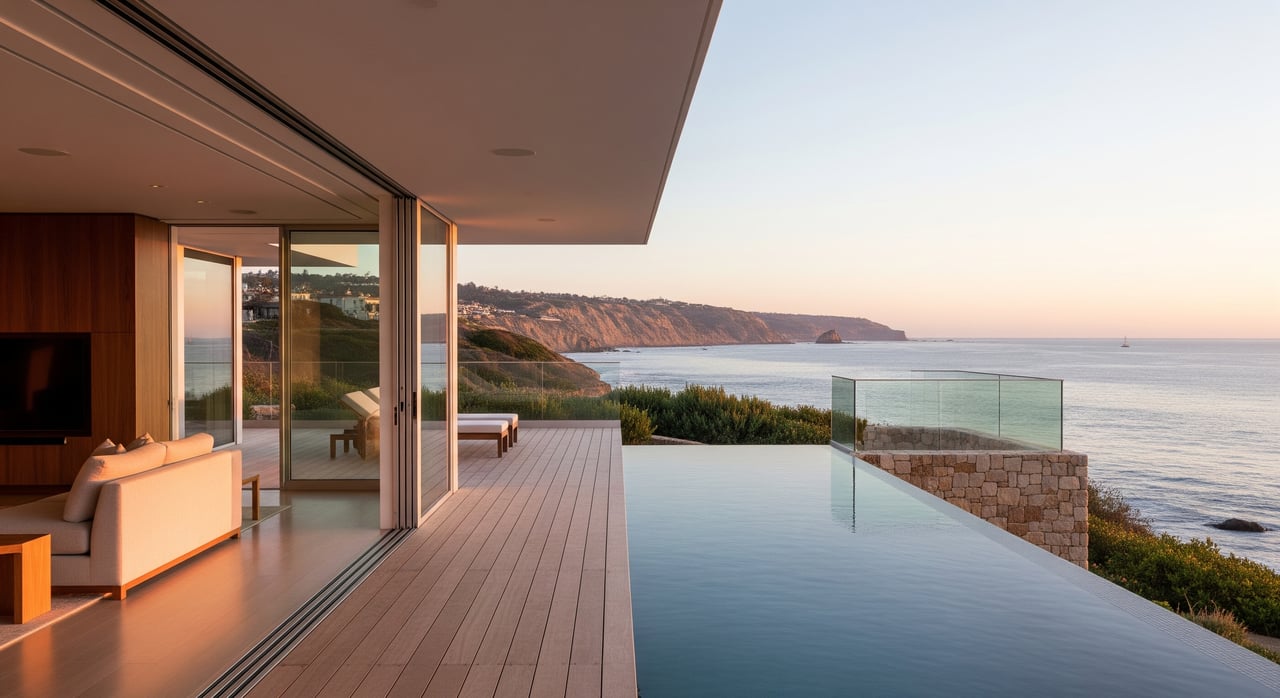
Does that blue horizon really add six figures to a La Jolla home? If you are eyeing a view property or pricing your own, it is natural to wonder how much the ocean actually boosts value. In this guide, you will learn how view quality, neighborhood, and coastal risks shape prices in La Jolla, plus a simple way to estimate the premium using recent sales. Let’s dive in.
Why ocean views matter in La Jolla
La Jolla is a premium coastal market with limited land, high baseline prices, and world-class amenities. That combination makes ocean views both scarce and prized. When a property offers broad vistas, sunset exposures, or an unobstructed horizon, buyers often pay more because only a small share of homes can deliver that experience.
Industry and academic literature generally finds that ocean views can add a noticeable premium. Broadly, many studies report view effects that can range from the low double digits up to several tens of percent. In La Jolla, the exact number varies by neighborhood and property type. The most reliable way to value a specific view is to compare it to recent local sales with and without similar views.
What counts as a valuable view
Not all views are equal. Quality and reliability matter.
- Panoramic or unobstructed views usually command the highest premium.
- Partial or peekaboo views add value but often much less than a full horizon.
- Floor level and orientation influence the view in condos, while lot elevation and siting drive view quality in single-family homes.
- A view with a low risk of future obstruction is more valuable than one that could be blocked by new development or landscaping.
Neighborhood differences across La Jolla
Micro-location influences how much a view affects price.
- La Jolla Cove and Prospect Street corridor: Views are scarce and coveted. Properties here often see very strong demand per square foot due to the combination of scenery and proximity to village amenities.
- La Jolla Shores: Many condos and some single-family homes enjoy water views. In buildings, premiums often vary by floor and orientation.
- The Bluffs, Mount Soledad, and La Jolla Farms: Elevated or bluff-top homes can capture sweeping vistas. Some locations may face bluff erosion concerns and public access nearby, which buyers weigh in pricing.
- Bird Rock and Windansea: Street orientation and setbacks create meaningful differences in view corridors. Two homes near each other can have very different view value.
How much is the premium
There is no single number that fits every La Jolla home. Literature often cites ranges in the ballpark of 10 to 40 percent for views, but local, property-specific analysis is essential. High-end, unique properties and small sample sizes can make estimates noisy. Treat the premium as something to measure with comps, not guess.
A quick matched-pair method you can use
Use this six-step approach to approximate a view premium in your exact submarket:
- Define the area: pick a La Jolla submarket such as Shores, Village, or Bird Rock.
- Gather sales from the past 6 to 12 months. If volume is low, extend the window.
- Filter for similar property type and size within about 10 to 15 percent.
- Choose pairs with comparable beds, baths, and condition that differ mainly by view quality.
- Compare sale price and price per square foot; note the median difference across pairs.
- Qualify your result: note sample size and any confounding factors like remodels or unusual lot sizes.
For condos, you can also compare the same floor plan within one building across different floors and orientations. That often gives a clean read on view value.
Risks and costs that can offset value
Ocean views are desirable, but coastal settings can introduce risks and maintenance that affect pricing and financing.
- Coastal hazards: Bluff erosion, cliff instability, storm surge, and sea-level rise are relevant in parts of La Jolla. Review regional projections using the NOAA Sea Level Rise viewer, and explore local coastal science from the Scripps Institution of Oceanography.
- Insurance and lending: Standard homeowner policies often exclude flood. Check FEMA Flood Map Service Center for zones and speak with insurers about coverage and cost.
- Permitting and redevelopment: Coastal rules can limit additions or structural changes near bluffs. Review the California Coastal Commission’s guidance on coastal development and the City of San Diego Development Services for local permitting.
- Rental considerations: Short-term rental potential can affect demand. Verify current rules on the City’s Short-Term Residential Occupancy page.
These factors do not eliminate view premiums, but they shape buyer willingness to pay and can influence appraisals and underwriting.
Appraisal, pricing, and marketing implications
Appraisers treat a view as a contributory amenity. When available, they prefer comparables with similar view quality. If they must use non-view comps, they adjust, which can be challenging with limited local data. As a buyer, know that appraisal outcomes can hinge on the availability of strong view comps.
For sellers, pricing should reflect actual view quality. Support your price with recent, similar view comps and highlight any measures that preserve views, such as recorded easements or landscape agreements. Market the view with professional photography, sunrise or sunset timing, and clear descriptions such as “unobstructed” or “panoramic” where accurate.
For buyers, quantify the premium you are paying by running the matched-pair method. Consider how the view will hold up over time, including obstruction risk and maintenance needs. In strong markets, well-presented view homes can sell faster and closer to list. In softer markets or where hazards are top of mind, premiums can be more volatile.
Buyer due diligence checklist
- Recent comparable sales with similar view classification and orientation.
- Natural Hazard Disclosure and any bluff or erosion reports available from the seller.
- Insurance quotes for flood and coastal risks, plus lender guidance on requirements.
- Title review of any public access easements or recorded view easements.
- Confirmation of likely obstruction risks from nearby lots or vegetation.
- Review of FEMA flood zones and consultation of NOAA sea-level projections.
Seller preparation checklist
- High-resolution photography and drone imagery where permitted that captures the view.
- A comp set featuring recent sales with comparable view quality and neighborhood.
- Clear disclosure of coastal hazards and any permitting or coastal engineering history.
- Documentation of view preservation, such as easements or neighbor agreements.
- Staging that orients seating and outdoor areas toward the view, within local rules.
Key takeaways
- View quality and reliability drive the premium. Panoramic and unobstructed views tend to add the most value.
- Neighborhood and property type matter. Condos can achieve strong view value on higher floors with less erosion exposure, while bluff-top homes can see higher absolute premiums plus higher maintenance and risk.
- Measure the premium with local comps. The matched-pair method is a practical way to gauge value in your micro-market.
- Factor in risks, insurance, and permitting. Use authoritative sources like FEMA flood maps, NOAA, the California Coastal Commission, and the City of San Diego when evaluating a property.
If you want a precise, property-specific view premium or you are preparing to list, let’s map the comps and your options together. Connect with Tanya Williams to get a clear plan for buying or selling in La Jolla.
FAQs
How do ocean views affect La Jolla home prices overall
- View premiums vary widely by view quality, neighborhood, and property type; use local matched-pair comps to estimate the effect for a specific home.
Are ocean-view condos or houses a better investment in La Jolla
- Condos on higher floors often deliver strong views with less bluff risk, while single-family bluff-top homes can see higher absolute premiums along with higher hazard and maintenance exposure.
Do partial or peekaboo views add much value in La Jolla
- Partial views usually add value, but typically less than unobstructed panoramas; the impact depends on how prominent and reliable the view is.
How do lenders and appraisers handle ocean views in La Jolla
- Appraisers prefer comparable sales with similar view quality and adjust only when necessary; limited comps can make appraisals harder and influence underwriting.
What coastal risks should La Jolla buyers weigh when paying for a view
- Review bluff stability, flood zones, and sea-level rise using FEMA maps and the NOAA Sea Level Rise viewer, and check local permitting constraints with the California Coastal Commission.