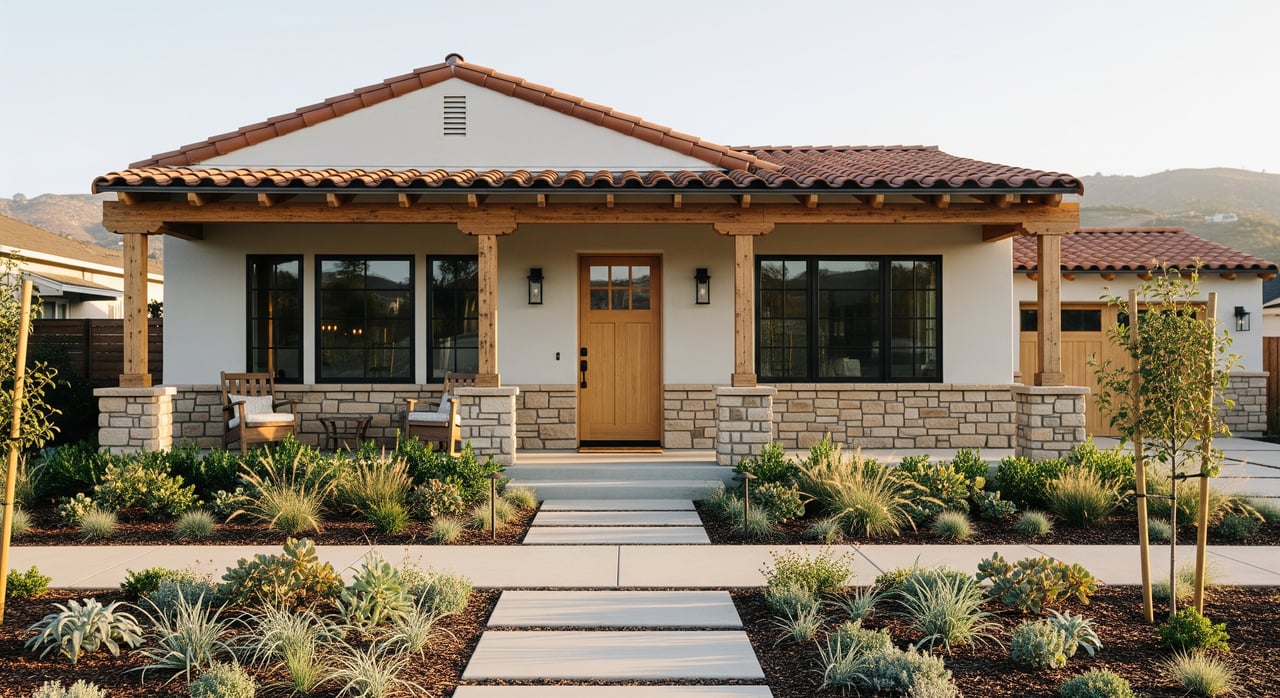
Is East County the smartest place to start your San Diego home search? If you want more space for your budget and a quicker path to ownership, it just might be. You still need a clear plan, though, because entry-level homes move fast and the details matter. In this guide, you’ll learn what counts as a starter home here, where to look, how to budget beyond the list price, and the essentials for inspections, financing, and risk. Let’s dive in.
What counts as a starter home
A starter home is usually an affordable, smaller property that you plan to own for a few years while you build equity. In East County, that often includes:
- Condos and townhomes with lower entry prices and shared exterior maintenance
- Small single-family homes with 1–3 bedrooms on compact lots
- Duplexes or 2–4 unit properties where you live in one unit and rent the others
- Manufactured homes in select communities
- Fixer-uppers that trade lower prices for repair needs
Because East County pricing is generally lower than coastal areas, your “starter” might be an older detached home rather than a compact condo. What fits your budget and lifestyle depends on financing, down payment, and how much maintenance you want to take on.
Where you’ll find them: neighborhood snapshots
You’ll see a range of options across East County. Here are common patterns buyers notice as they compare areas.
- El Cajon. A wide mix of condos and older single-family homes on smaller lots, often among the more affordable urban options.
- La Mesa. A walkable downtown core with historic bungalows and cottages, plus established neighborhoods with steady demand.
- Lemon Grove. Compact residential blocks with relative affordability between La Mesa and El Cajon.
- Santee. Subdivisions with parks and trails, a mix of older ranch homes and newer tracts, and mid-range pricing within East County.
- Lakeside. A more semi-rural feel with larger lots and single-family homes; prices vary with lot size and condition.
- Spring Valley, Casa de Oro, Rancho San Diego. A mix of condo and single-family options; prices range from entry-level in parts of Spring Valley to higher in Rancho San Diego.
- Alpine, Jamul, foothill areas. Larger lots and a rural lifestyle. Some properties carry higher land and insurance costs despite distance from job centers.
Market boundaries for “East County” can vary. Some definitions include anything east of the I-805 or I-15 corridors, while others focus on the El Cajon–La Mesa–Santee–Lakeside cluster. Work with your agent to set a search area that fits your commute and budget.
What affects price and competition
Location and commute
Proximity to major highways like I-8, SR-52, SR-67, SR-94, and SR-125 matters. Homes closer to job centers tend to draw more interest. Access to parks, retail, and transit also influences demand. If school boundaries are important to you, use public data sources to research them and factor that into your search.
Age and condition
Many East County starter houses were built between the 1940s and 1970s. Expect smaller floor plans and systems that may be at mid-life. Roofs, HVAC, plumbing, and electrical may need updates. Unpermitted additions are not unusual in older areas, so checking permit history is essential before you commit.
Newer subdivisions from the 1990s and 2000s offer more modern systems and layouts but sometimes include HOA fees and community rules. Condos and townhomes typically have lower list prices but add monthly dues and project-level rules that affect lending and resale.
Competition and offer trends
Entry-level listings often move fastest. You may see multiple offers, over-asking prices, or tighter contingency timelines on the most affordable homes. Some buyers consider escalation clauses or flexible closing terms. Work with your agent to weigh the trade-offs so you stay competitive without overreaching your risk tolerance.
Hidden cost factors to budget for
- HOA dues for condos and townhomes. Add these to your monthly affordability calculations.
- Property taxes and assessments. California’s base tax is about 1% of assessed value, with possible local assessments and supplemental taxes after purchase. The San Diego County Assessor’s office is a good place to verify parcel-specific information.
- Insurance. Homeowner’s insurance is standard. In foothill and rural areas, wildfire risk may increase premiums. Check CAL FIRE’s fire hazard severity zone maps for a property’s wildfire exposure.
- Utilities and maintenance. Larger lots can mean higher water, landscaping, or septic costs. If a property has a well or septic system, factor in testing and potential upgrades.
Smart financing for first-time buyers
Getting pre-approved early can make or break your chances in a fast-moving segment. Here are common loan types and programs to discuss with your lender.
- FHA loans. Designed for lower down payments with mortgage insurance. Learn about FHA-backed financing on HUD’s FHA resource page.
- Conventional loans. Some programs allow as little as 3% down with private mortgage insurance, subject to credit and income.
- VA loans. Competitive terms with no down payment for eligible veterans and service members.
- USDA loans. Available only in specific rural areas; eligibility depends on location and income.
- Down payment assistance. Statewide options from CalHFA can pair with FHA or conventional loans for qualified buyers. Check the San Diego Housing Commission for local information and links to current programs.
Bring a full pre-approval, not just pre-qualification. Sellers in competitive brackets tend to prioritize buyers who have submitted income and asset documentation to a lender.
Inspections and due diligence you should expect
Inspections help you budget for repairs and avoid surprises. In East County, plan for:
- General home inspection covering structure, roof, electrical, plumbing, and HVAC
- Pest and termite inspection, which is very common in Southern California
- Sewer scope in older neighborhoods to check for root intrusion or pipe issues
- Roof, HVAC, or foundation specialist follow-ups if flagged by the general inspector
- Well and water quality testing for properties with private wells
Always verify permit history. Unpermitted additions can affect safety, insurance, financing, and resale. Use local city or county building departments to confirm records; the County’s Planning & Development Services page is a helpful starting point for unincorporated areas and permits at the county level. You can begin at the County of San Diego Planning & Development Services.
Risk, insurance, and taxes: know before you offer
A property’s location can affect both monthly costs and insurability. Before you write an offer, check:
- Flood risk. Review the parcel on the FEMA Map Service Center to see if flood insurance may be required.
- Wildfire risk. Confirm whether the home is in a state-mapped hazard zone using CAL FIRE’s fire hazard severity zone maps. Ask your insurance provider how this could impact premiums.
- Property taxes and assessments. Validate tax rates, Mello-Roos, and special district charges through the San Diego County Assessor’s office. Expect a supplemental tax bill after your purchase when the assessment updates to your sale price.
If a condo is on your list, review the HOA budget, reserve study, meeting minutes, and CC&Rs during your contingency period. Healthy reserves and clear rules help protect your investment and support future resale.
How to compete without overreaching
You can write a strong offer without giving up critical protections. Consider these approaches with your agent:
- Get fully underwritten before shopping so your lender can close on time.
- Use clean terms. Keep the offer simple with reasonable timelines, clear contingencies, and strong communication.
- Focus on fit. Target homes at a price point where you can make a competitive offer and still budget for needed repairs.
- Consider backup position. If you lose out, a backup offer can put you first in line if the initial buyer cancels.
Condo vs. small house: quick guide
- Choose a condo or townhome if you value lower entry price and less exterior maintenance. Budget for HOA dues and review project rules.
- Choose a small single-family home if you want a yard and more control over your property. Plan for higher maintenance and potential system updates.
- Consider a duplex if you’re open to managing a rental. Future rental income may help your affordability, but be sure your lender uses realistic assumptions and you are comfortable with landlord responsibilities.
A simple plan to start your search
- Clarify your monthly comfort number, including taxes, insurance, and any HOA dues.
- Get pre-approved with a lender who knows local programs.
- Narrow your search area by commute, amenities, and property type.
- Tour early and often. Entry-level listings move quickly.
- Be ready with inspection and offer strategies that fit your risk tolerance.
When you’re ready to explore, you don’t have to do it alone. You can lean on a calm, local advisor who explains each step and helps you make confident decisions from pre-approval to closing.
Ready to find your East County starter home? Connect with Tanya Williams for personalized guidance and a focused plan that fits your budget and lifestyle.
FAQs
Which East County neighborhoods are most affordable?
- Many buyers look first at El Cajon, Lemon Grove, and parts of Spring Valley or Casa de Oro for entry-level options, while Santee and La Mesa are often mid-range and Rancho San Diego tends to be higher.
What inspections are most important for older East County homes?
- At minimum, get a general home inspection and termite report, plus a sewer scope for older properties; add roof, HVAC, foundation, or well/septic specialists as needed.
How competitive is the market for starter homes in East County?
- Entry-level properties often move fast and can draw multiple offers; being fully pre-approved with a clear strategy helps you compete.
Are there first-time buyer programs I can use in San Diego?
- State programs from CalHFA and local resources through the San Diego Housing Commission are worth reviewing with your lender for current eligibility.
How do HOA dues affect what I can afford?
- Lenders include HOA dues in your monthly debt-to-income ratio, so higher dues can lower your maximum purchase price even if the list price looks attractive.
How do I check wildfire or flood risk before I make an offer?
- Use CAL FIRE’s hazard maps and the FEMA Map Service Center to evaluate risk and discuss the insurance impact with your provider.